
* This is an archive of my own blog and online notes, with weekly entries collected by month. The current week in stand-alone format is available here. Feel free to CONTACT ME if so inclined.
DAYLOG MON 24 NOV 25 / ELECTION CHEATING REVISITED: As discussed more than once here in the past, there is a lot of concern -- with a fair amount of reason -- that Donald Trump will try to derail the 2026 midterm elections.
As discussed in an article from NPR ("How could Trump interfere in the midterms? Here's what voting officials are watching" by Miles Parks, 21 November 2025), election officials across the USA, both Democrat and Republican, are very aware of the threat.
Trump has, from 2016, made fraudulent claims of election cheating against him -- notably continuing to claim the 2020 election was "stolen", and pardoning people who were convicted for trying to overturn that election. Trump has issued executive orders to try to dictate to the states how elections should be conducted, in particular targeting mail-in voting, with talk of taking on voting machines as well. In reality, the states fully control their elections; the XOs are ignored.
More dramatically, Trump might try to declare a national emergency to allow him to take control of the elections. He's made a habit of declaring national emergencies on a range of pretexts, for example to allow him to impose tariffs, but the courts seem to be getting weary of that game. There is Trump's related impulse to send the National Guard to American cities -- but the courts are getting weary of that game as well. There are also limits to what the National Guard can do, and little enthusiasm in the National Guard to help Trump steal elections.
Of course, Trump might try to activate his ICE "militia" to interfere with the vote -- but that would be blatantly illegal; it would also be difficult to do, and run into strong resistance. It's an unsettling idea, but it's hard to see that it's workable.
The most ominous threat is that Trump has staffed his administration with election cheaters who could use the government's resources to interfere with and undermine the credibility of elections. The Trump administration has pointedly undermined election cybersecurity, and repeatedly demanded privileged voter information from the states -- fortunately, with the demands again ignored. Nobody's sure what else they might try.
In sum, Trump's power to game elections is limited -- but the threat is still there. As a footnote, Colorado election official Tina Peters -- convicted of tampering with voting machines -- is doing a 9-year sentence in state prison. The Trump administration wants her to be transferred to a Federal prison. Colorado state officials seem unlikely to consent.
DAYLOG TUE 25 NOV 25 / AI TERMINOLOGY: We're in the middle of a chaotic artificial-intelligence revolution of sorts, with a lot of confusing terminology being thrown at readers.
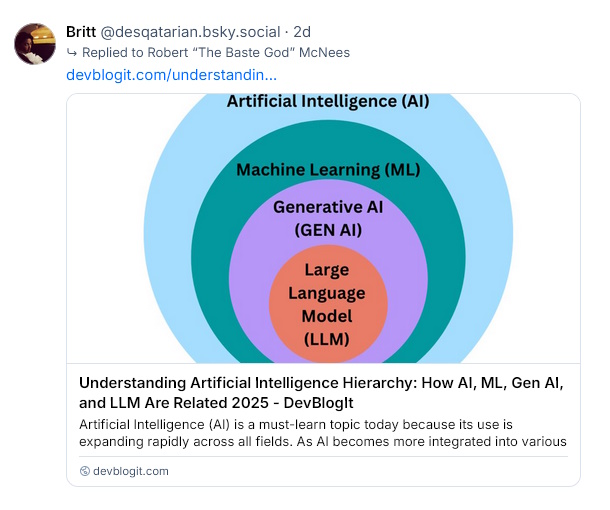
An article from DEVBLOGIT by tech writer Ansam Yousry ("Understanding Artificial Intelligence Hierarchy: How AI, ML, Gen AI, and LLM Are Related", 21 July 2024), sorted through the terminology:
There is also AGENTIC AI -- meaning GEN AI systems, typically LLMs, that make and possibly execute plans. One last term as a footnote:
DAYLOG WED 26 NOV 25 / WHO GOES THERE? After Xitter introduced a "transparency" feature that tells where Xitter accounts were being posted from, the world found out that, to no great surprise, a lot of them were fakes.
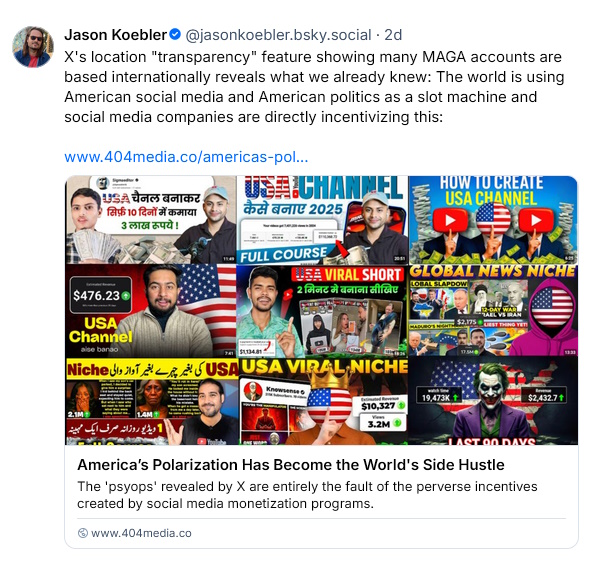
An article by Jason Koebler of 404 MEDIA ("America's Polarization Has Become the World's Side Hustle", 24 November 2025) probed into the matter, saying that accounts supposedly based in the USA were from countries including Bangladesh, Vietnam, India, Cambodia, and of course Russia:
QUOTE:
An account called "Ivanka News" is based in Nigeria, "RedPilledNurse" is from Europe, "MAGA Nadine" is in Morocco, "Native American Soul" is in Bangladesh, and "Barron Trump News" is based in Macedonia, among many, many of others.
END_QUOTE
Again, none of this is news, trolls have been around for years, but "AI slop" has made it easier to do as of late. Now generating fake postings is literally a global industry, distributed around the world -- and financially supported by social media companies themselves.
It might be thought that hostile foreign governments -- and local subversive political movements, the two often being linked -- are behind the global fakery plague, but that's only about half the story. The other half involves making easy money peddling trash:
QUOTE:
Each social media platform has either an ad revenue sharing program, a 'creator bonus' program, or a monetization program that directly pays creators who go viral on their platforms. This has created an ecosystem of side hustlers trying to gain access to these programs, along with YouTube and Instagram creators teaching people how to gain access to them.
END_QUOTE
The USA is the central target, because that's where the money is, the payoff for the effort being at least 5x that for, say, Pakistan. Alas, Xitter's "transparency" feature is nothing new and game-changing: Facebook and Youtube have had similar features for years, and they have amounted to little. The Facebook "Military Aviation" account, supposedly from Washington DC, is actually from Cambodia.
The people supposedly in charge don't care. Koebler writes: "This is a problem that AI has drastically exacerbated, but it is a problem that has wholly been created by social media platforms themselves, and which they seem to have little or no interest in solving."
Myself, I was thinking "transparency" was a bigger deal than it in fact really is. However, I'd still like to see it on BlueSky: there are a lot of accounts supposedly on the Left that spend all their time bashing Democrats, and I'd like to know where they're really from.
DAYLOG THU 27 NOV 25 / DRONE WALL: According to an article from BUSINESS INSIDER ("Ukraine's first 'drone wall' is about to see action combating menacing Russian threats, its Western maker says" by Jake Epstein, 12 November 2025), Ukraine is under intense attack by Russian drones, glide bombs, and missiles. Missiles are well the minority, the volume of the attacks being with cheap killer drones and glide bombs, the intent being to saturate Ukrainian defenses.

Now French defense technology company Atreyd is deploying a "drone wall" system to Ukraine to blunt such attacks. The "wall" consists of a swarm of up to 200 first-person view (FPV) drones that are deployed in staggered layers in a "box" defined in the sky. The FPV drones stand by, waiting for a k-drone or glide bomb to enter the box, to then engage it and destroy it with an explosive charge. Drones that don't engage land to be used again, presumably being given fresh batteries or recharged.
The system requires minimal training, with one soldier able to direct a swarm of up to 100 drones. The system is based on AI technology and can operate autonomously, able to defy jamming; an operator can override the system when required. Glide bombs are harder to intercept than k-drones, and for now the drone wall can't deal with them -- but that will be fixed, with Atreyd officials saying they will be able to take down the new jet-powered glide bombs.
Atreyd offers a "battle OS" to control its drone swarms and other weapon systems. The company is working on a range of combat technologies, such as a large drone "mothership" deploying a swarm of FPV drones, and a "drone mine" that releases an FPV drone when it senses a target nearby. Incidentally, the Iranians have developed an "anti-drone mine" that detects a drone, or helicopter, overhead, and then blasts it out of the sky. It has a range of a few hundred meters.
A recent Ukrainian video showed an interceptor taking on a Russian Lancet attack drone. The Lancet took evasive action on detecting the interceptor; it momentarily lost track, but then got on the Lancet's tail, tracking further evasive maneuvers to blast the Lancet out of the sky. It was a fun "dogfight" video. Also, Ukrainian forces have used shotguns to take down battlefield FPV drones; now they are using anti-drone ammunition as well, that being rifle ammunition that, typically, uses a few pellets of heavy buckshot.
Things are very difficult in Ukraine right now, but for the time being, the Ukrainians are holding their own. Come next year, the war will have lasted four years. How much longer? It should be noted that WWI lasted for 4 years 4 months. Getting near the end?
DAYLOG FRI 28 NOV 25 / AI PLUS & MINUS: Everyone has got sick of the current artificial intelligence (AI) "revolution". It's promised to change the world, and it has, but mostly to fill it up with junk data. However, I'm still finding it useful to a degree.
As was discussed here in October, I'm finding Google Gemini a very valuable tool. In my studies on the Japanese language, I find it can answer tricky questions about syntax and usage; if the answer Gemini gives me isn't satisfactory, I get links to hunt down the right answer. I wrote a little ebook on gyroplanes, and I asked Gemini for a list of gyroplane manufacturers; I got the list, and tracked down all the websites. As before, Gemini is really a search engine -- but it searches for the information I want, not just documents to wade through.
As far as imagery goes, I played with the NightCafe image generator for a month or so, and I could not get good results with it. Gemini has an associated image generator named "Nano Banana", and I recently started tinkering with it. The first thing I did was ask for a digital model image of a cryptocoin ATM. After some tinkering, I got back a clean image of such an item, not reflecting any particular product. The image was good, but the real attraction was that it wasn't copyright-protected.
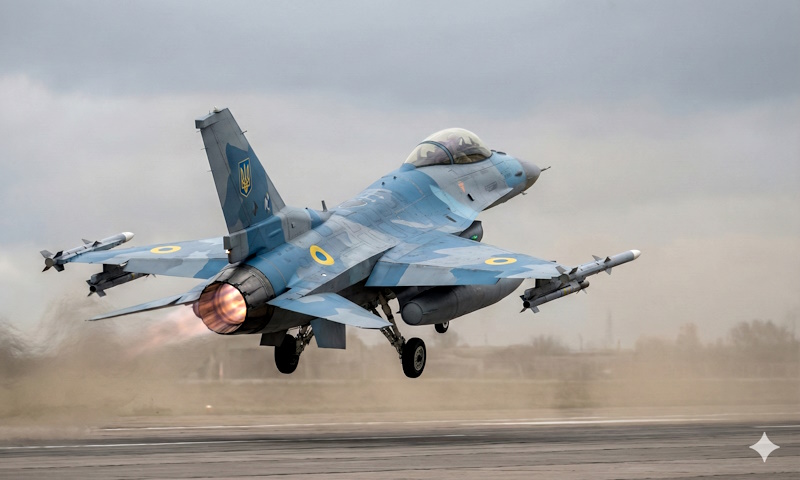
I asked it to generate a modern gyroplane in flight against a cityscape, and got back something fair -- but the gyroplane had four rotor blades, while modern gyroplanes have two. I logged the error with Gemini, and it came back with the same image, this time with two rotor blades. Today, I asked for an F-16 fighter in Ukrainian colors and Ukrainian blue "splinter" camouflage, and got back an excellent picture. To be sure, Gemini is still clueless much of the time, but it worked far better than NightCafe.
Also interesting, I had an old picture of Kamala Harris with her sister Maya and her niece Meena, then a little girl. The picture was slightly too small and not very clean; I enlarged it a bit, then ran it through "Kaze", a web application that converts photos to paintings. While Kaze's "oil painting" conversions look kind of cheesy, I selected a digital rendering that ended up very close to a photograph, the result being a big improvement. I've found other useful AI tools, for example an AI-driven transcription generator for YouTube videos.
All that said, AI is still troublesome: filling up the internet with junk, helping users go psychotic, hogging electric power with giant data centers. It seems to be the inverse of the personal-computer revolution of the 1980s, which was driven bottom up, with people getting new toys and figuring out fun things to do with them. With AI, it's more like the tech bros came up with a plan for what will happen, and then tried to impose it on the world -- one primary agenda being to lay off most of their staff. There's even talk of a "one-person billion-dollar corporation", with a single CEO running a staff of AI bots that perform all corporate duties. That's not realistic now, and may never be. It's a wild dream for CEOs -- but more like a nightmare for everyone else.
BACK_TO_TOPDAYLOG MON 01 DEC 25 / TRUMP WRECKS THE EAST WING: One of the many unfortunate things Trump has done was to decide to have the East Wing of the White House completely demolished. That was far from the worst thing he's done, but it has very high visibility.

Now, it turns out, Trump doesn't actually have serious plans for the re-build. The problem is that the architect, James McCrery II, balked at the size of what Trump wanted -- 8,360 square meters (90,000 square feet) -- would dwarf the White House -- which is 5,110 square meters (55,000 square feet). Such an oversized ballroom would be an eyesore, and the next administration would be stuck with it, since it would be hard to justify spending a pile of money to get rid of it.
So Trump didn't have a real plan when he wrecked the East Wing, he just had "concepts of a plan". He's been asking for "contributions" from corporations for the re-build. JP Morgan Chase has not contributed, CEO Jamie Dimon explaining that JP-MC does a lot of government work, and is "very careful about how anything is perceived -- And also how the next DOJ is going to deal with it ... we're quite conscious of risks we bear by doing anything that looks like buying favors ... "
It is a relief to know that at least a few folks in high places realize Trump isn't going to be around that much longer, and people are going to be called to account after he's gone. By the way, Trump apparently only has pledges for the re-build, suggesting that taxpayers will ultimately foot the bill. [UPDATE: Trump slapped a frivolous lawsuit on JP-MC in retaliation. The lawsuit is very likely to be dismissed.]
Anyway, Trump's White House renovation is clearly a muddle and hopefully he'll stay bogged down with it. If we're lucky, he won't get around to his follow-on scheme to more or less duplicate the Arc de Triomphe of Paris in Washington DC. It would be more complicated to get done, since Trump would have to overcome more bureaucratic obstacles than he did with the East Wing demolition. Changes to the National Mall are hard to push through, so the "plan", if it can be called that, is to site the arch on the Arlington Bridge on the Potomac as a "gateway" to DC.
I had Google Gemini / Nano Banana generate an image of the Arc de Triomphe in DC; the result had the arch about where the WW2 memorial is now. In response to posting it, one reply suggested the arch would become "the world's biggest urinal." I didn't think of that, but right.
What happens next? I was thinking early in 2025 that 2025 would be the worst year of Trump 2.0, since Trump would run out of steam and resistance would increase. That seems accurate now; in 2026, the Trump Regime seems to be gradually going to pieces.
DAYLOG TUE 02 DEC 25 / NON-VIOLENCE AGAINST TRUMP: I was scrolling through BlueSky on Sunday -- getting myself into a foolish dispute, which I backed out of after realizing my blunder. More constructively, I then ran into a poster who called for the violent overthrow of Trump. I commented: "Violent revolution is not a realistic option. This person may well be a provocateur."
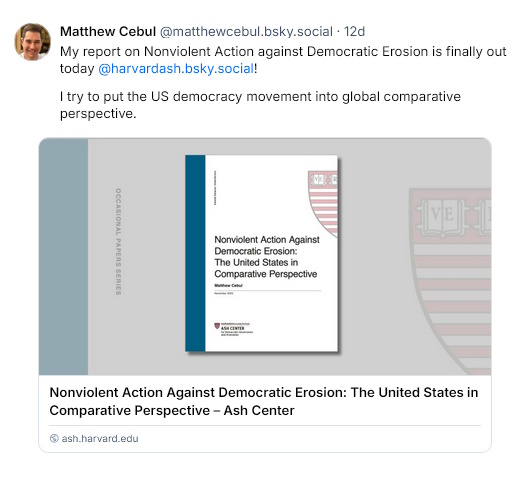
The reply was that the Americans were justified in fighting for freedom in 1776, and it's justified. That was, as far as I was concerned, missing the point, so I clarified:
QUOTE:
My problems with the "violent solution" are:
END_QUOTE
The reply was that I was "naive" to think there was no group that could overthrow Trump. I wrote: "OK, so educate me. I know of past violent resistance groups such as the Weather Underground, the Red Brigades, and the Red Army Faction. All three were total failures, BTW. What do we have now?"
The glib response was that they were operating in complete secrecy. Really? Like the Weather Underground didn't take credit for their bombings? Since when did terrorist groups stop making public statements? I wrote: "How do I go about supporting a violent resistance movement that I have no evidence even exists? Answer: I know I can't. End of story."
It was indeed end of story -- I got blocked. Fine, I figured I was being trolled anyway. Historical analysis shows that the success rate of nonviolent resistance is about 50%, violent resistance about 25%. It is also true that governments often try to provoke resistance organizations to violence so they can be crushed. Trump spends a lot of time playing up the threat of "Antifa terrorism", even though the mass resistance movement against him has been careful to avoid violence. Kash Patel even tried to play up "transgender terrorism", but that was too silly even for him, and he didn't persist.
Since the start of Trump 2.0, I've been frightened, sometimes literally dreadfully, of out-of-control violence on a personal and national level. Violence is not the answer. Again, I'm thinking that most of those calling for violent action are provocateurs. Fortunately, I don't see so many of them as did early in the year; those driving the anti-Trump resistance see violence as a non-starter. Violence so far has been in the form of isolated instances -- but that doesn't reassure me that we're safe.
DAYLOG WED 03 DEC 25 / BATTLE FOR POKROVSK: Since July 2024, Russian forces have been slowly pushing towards the Ukrainian city of Pokrovsk, and are now fighting it out with Ukrainian forces in the city. Since only the combatants have any specific idea of what's going on there, the battle has ended up hidden in the "fog of war", the Russians claiming they've already won -- General Syrsky saying the Russians are lying. So far, the Ukrainians are holding on.
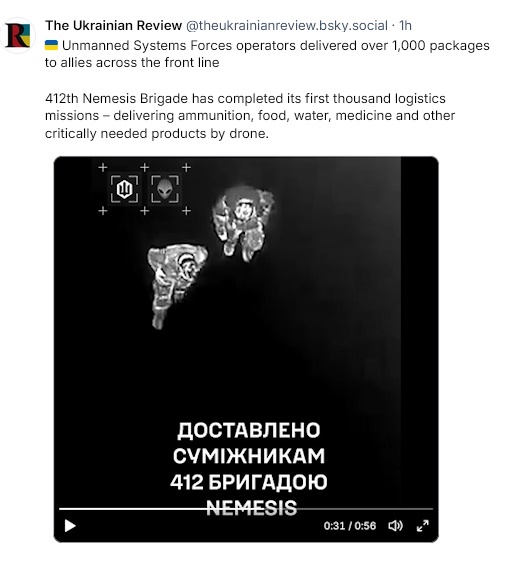
Partly due to shrinking resources and partly due to the unending presence of drones on the battle line, the Russians have taken to sending in groups of infiltrators, on foot or on motorbike. It works better in foggy or otherwise low-visibility conditions. There have been occasional attempts along the battle line to send in small armored groups, but they come to ruin. There are believable tales that the Russian troops sent in are starving, and that they are surrendering in numbers.
Thanks to the presence of drones, resupplying the defenders is difficult; supplies are getting in using air and ground drones, with the resupply process apparently ears to be increasingly efficient. Pokrovsk appears to be "battle lab" of sorts for Ukraine.
Incidentally, the Russians have started to use jet-powered versions of the Shahed drone over Ukraine, but they're not so fast -- videos showing Ukrainian interceptor drones overtaking and destroying them. The jet drones are more expensive and have shorter range, so they're not taking over. The Russians are also now sending in Shaheds carrying R-60 air-to-air missiles, it seems to take on defending aircraft. How well that will work for them remains to be seen.
Although the US-driven "peace effort" continues, Vladimir Putin has made it clear that he intends to win the war. There is no prospect of any agreement, and the "peace effort" is going nowhere. It appears the US negotiators are mostly after business deals.
Who knows what happens next? If Pokrovsk manages to hold out to the end of the year, that will have to be accounted a Ukrainian success -- having inflicted an estimated 100,000 casualties on the Russians attacking the city in this year. How much longer can the war last?
DAYLOG THU 04 DEC 25 / AI BOOM & BUST: After suffering through the overhyped AI boom for the past few years, the boom now appears to be heading for a bust. As reported in an article from FUTURISM ("The Number of People Using AI at Work Is Suddenly Falling" by Joe Wilkins, 3 December 2025), data from the US Census Bureau shows that big companies haven't seen any revolutionary impact from AI.
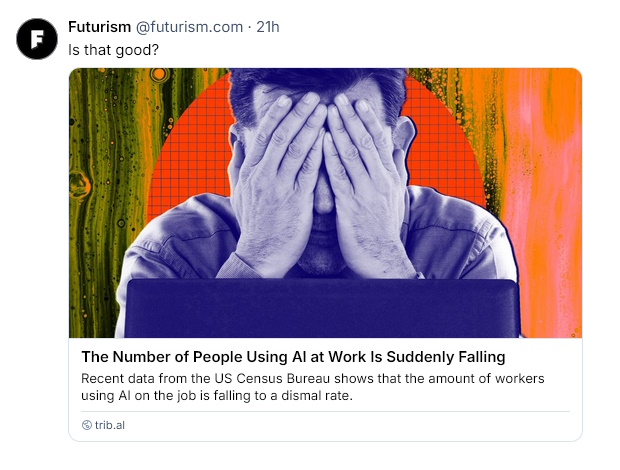
The data shows that in October, the number of people using AI to "produce goods and services" is only 11% -- when it was 12% two weeks earlier. Back in March, 74.1% of companies with 100 to 249 employees say they don't make serious use of AI. That number has now gone to 81.4%. For bigger companies, over roughly the same timeframe that proportion has gone from 62.4% to 68.6%. In effect, companies regard AI as an interesting toy, but not vital to their work.
Tech companies are investing trillions of dollars to get an edge with AI tech, but it's not making money for them. Since the US economy is, to a substantial degree, being held afloat by AI investment, an AI crash could pull down the rest of the economy. Incidentally, it seems the Census Bureau is still giving useful data, even in the age of Trump. I'm certain that working for the government is a complete nightmare right now, but government agencies will survive, if the worse for wear.
* Another article from FUTURISM "Microsoft's Attempts to Sell AI Agents Are Turning Into a Disaster" by Victor Tangermann, 3 December 2025), tech giant Microsoft has found that few are interested in "AI agent" tech under the MS Azure product system.
AI agents are capable, in principle, of constructing and executing plans. It's an impressive capability -- or at least would be, if it worked. As discussed here in May, Carnegie Mellon University (CMU) in Pittsburgh conducted a survey of AI agent offerings, to find that even the best of them, Google's Gemini, only gave good results about 30% of the time. Some months later, OpenAI released an agent based on the company's ChatGPT -- with users calling it "slow", "shaky", and "not very useful."
Not many Microsoft customers are buying. Fortunately for Microsoft, that company isn't that wedded to AI, making more money by selling data services -- including to AI companies. OpenAI faces a harder future.
DAYLOG FRI 05 DEC 25 / MACRON & MEDIA CERTIFICATION: As discussed in an article from EURONEWS ("Macron's plan to 'label' trustworthy media manipulated and taken out of context" by Estelle Nilsson-Julien, 5 December 2025), French President Emmanuel Macron ignited controversy when he was interviewed by the newspaper LA VOIX DU NORD on 19 November, with Macron quoted as saying media outlets should be given labels to certify they were trustworthy.
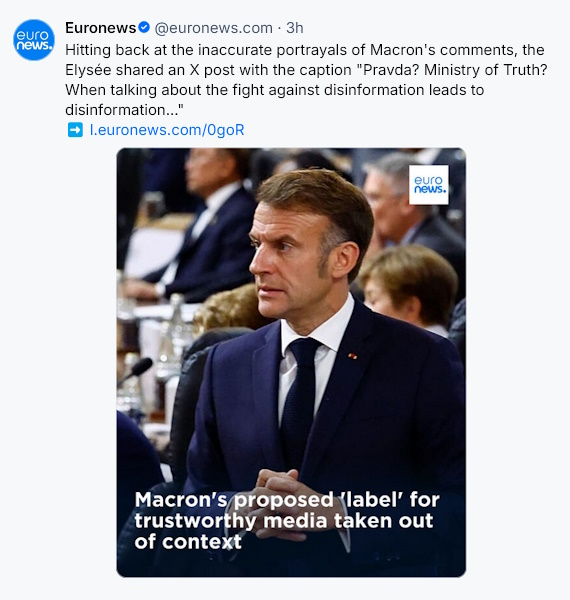
To zero surprise, Macron was attacked by Right-wing media outlets, particularly those under the control of billionaire Vincent Bollore -- commenters saying Macron was an "authoritarian" who wanted to "control the media" through a "Ministry of Truth". Also to zero surprise, the commenters were cherry-picking Macron's comments, the Elysee saying on a Xitter posting that it seemed "the fight against disinformation leads to disinformation ..."
In the 19 November interview, Macron suggested measures needed to be taken to deal with "fake news" online, that there needed to be some way to distinguish "news sites" from "networks and sites that make money from advertising". Macron said:
QUOTE:
I think it's important for there to be a certification process carried out by professionals, who can say: "This does not comply with ethical standards and is a manipulation of information." Information is a dangerous question in fact. So there are ethical rules.
END_QUOTE
Macron then cautioned:
QUOTE:
It's not the government or the state that can say: "This is information, this is not." We don't want to fall into that trap either, because that's not what democracy is about. Otherwise, it quickly becomes an autocracy.
END_QUOTE
Macron was actually thinking of certification under the "Journalism Trust Initiative (JTI)", launched in 2021 by media monitoring organization Reporters Without Borders. The JTI focuses on how media content is produced and if it meets ethical standards. The certification criteria were devised by a committee of 130 experts including journalists, various institutions, regulatory bodies, publishers, and members of the tech industry. The JTI effort has been supported by more than 2,400 media outlets in 127 countries.
While "self-regulation" has a bad history, it seems to be the only way to deal with "fake news" without infringing on freedom of speech. Governments can encourage the process, but not control it. Can we see collective certification extending to fact-checking sites -- or to sites to check AI chatbots for bias?
BACK_TO_TOPDAYLOG MON 08 DEC 25 / ONCE & FUTURE HAS-BEENS: Donald Trump is not going to be around that much longer, with the question of: what comes after him? Nobody has a sure answer -- but one Dan Seitz, posting on BlueSky, suggested that Trump's stooges will be unhappy people. Seitz says that none of the people riding the Trump Train "seems to grasp they're not in a movie and that their decisions are going to define the rest of their lives in ways they don't understand and aren't going to like."
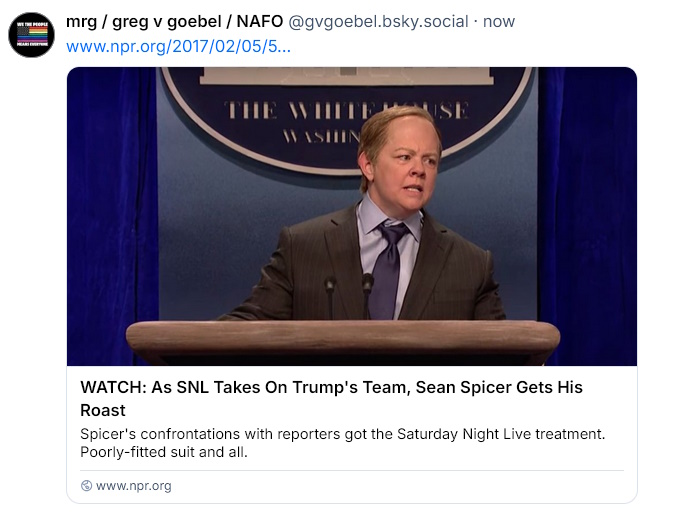
Seitz points to those caught up in Nixon's Watergate scandal, saying "they never escaped it. Even after they served their time, paid their restitution, made their apologies, it closed doors, cost them friendships, and in a few cases ... took their sanity."
Those riding the Trump Train after his first administration have faded out in much the same way. Rick Perry and Sean Spicer, having fallen out of favor, effectively disappeared. To the extent Spicer is remembered, it's only from Melissa McCarthy's lethal parody of him on SNL. Cabinet members from Trump's first term sometimes pop up to claim they were "guardrails" against Trump's excesses -- but that's pathetic, the only thing to be said for them is that they weren't quite in the same league with the toadies surrounding Trump now. During the first Trump term, there were also a lot of conservative has-beens -- remember Art Laffer of the Reagan Era? -- who tried to get on the Trump Train, and promptly disappeared again.
To be sure, a good number of Trump's current stooges, such as Kristy Noem, Kash Patel, and Pete Hegseth, are likely to be held accountable in the era after Trump -- but lesser figures in Trump 2.0, such as Sean Duffy and Henrietta Leavitt, are doomed instead to obscurity:
QUOTE:
Nobody's going to throw them in jail, but nobody's going to respect them, either. Imagine going through your life with people laughing at you and closing a door in your face, and you literally lack the perspective to understand why.
END_QUOTE
Again, none of Trump's stooges seem to have any long-term vision, failing to understand that their efforts will not end well for them. Seitz says they will get what they have coming to them, and "won't even understand why it's happening, let alone why they deserve it."
DAYLOG TUE 09 DEC 25 / EU V XITTER: A few years back, the EU passed a "Digital Services Act (DSA)" to regulate online business. Now, Elon Musk's Xitter service has become the first big online platform to be fined under the DSA -- to the tune of about $140 million USD.
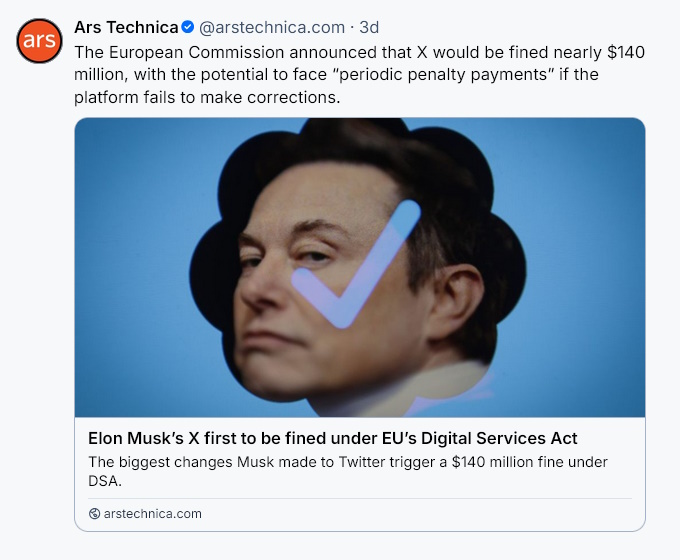
The most glaring problem is Xitter's "blue check mark" that supposedly validates accounts -- but it doesn't do that, since anybody can get a blue check mark for $8 USD a month. Fake accounts get validated as easily as legitimate ones. The European Commission says that is "deceiving users", violating the DSA since the "deception exposes users to scams, including impersonation frauds, as well as other forms of manipulation by malicious actors." The DSA doesn't require validation of users, but "it clearly prohibits online platforms from falsely claiming that users have been verified, when no such verification took place."
Another problem was that Xitter did not provide background information on ads, to allow researchers to "detect scams, hybrid threat campaigns, coordinated information operations, and fake advertisements." Xitter was reluctant to provide such data to researchers, and would not provide critical information, such as "the content and topic of the advertisement, as well as the legal entity paying for it."
More broadly, Xitter has refused to provide public data to researchers investigating hate speech, child safety, and misinformation on the platform. Along with a lack of access, the researchers feared lawsuits if they said unkindly things about Xitter.
Musk, to no surprise, intends to sue, and is bitterly complaining -- posting to Xitter: "The EU should be abolished and sovereignty returned to individual countries, so that governments can better represent their people." Conservative political allies, such as Vice President JD Vance, have come to Musk's defense, decrying EU "censorship" -- even though the EC didn't complain about Xitter content, instead complaining about the company's fraudulent practices and a lack of transparency.
Musk's ranting about "returning sovereignty" was foolish: the EU is not a federation, member states are sovereign, and the EU does no more than regulate interactions between the states and support collective action. However, Musk has never been noted for good sense.
DAYLOG WED 10 DEC 25 / CHINA V US IN RENEWABLES: As reported in an article from NPR ("How China, not the US, became the main climate solution story in 2025" by Julia Simon & Anthony Kuhn, 8 December 2025), the Trump Regime regards climate change as a "hoax", with the White House declaring: "Rolling back the unpopular Green Energy Scam and unleashing energy sources like natural gas, nuclear, and beautiful, clean coal are commonsense policies that will increase base load power, strengthen grid stability, and lower energy costs."
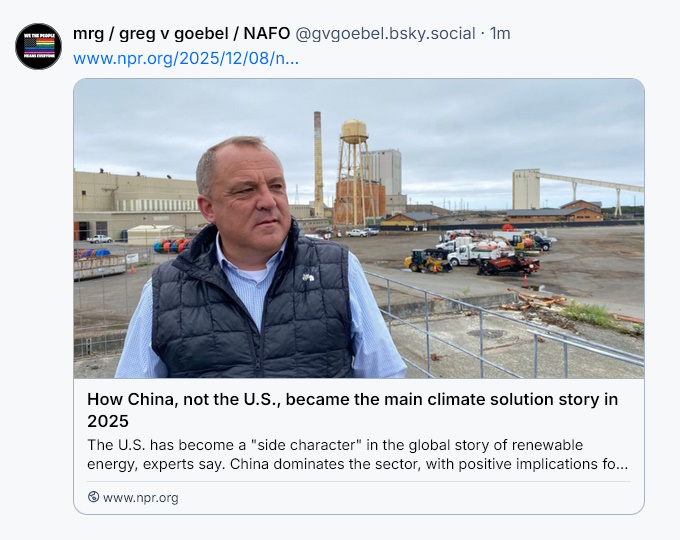
In the meantime, China dominates the world in renewable energy. In the first half of 2025, China installed more solar power systems than the rest of the world combined, and accounts for 74% of all large-scale solar and wind under construction. The USA, in contrast, accounts for only 5.9%, with the Trump Regime greatly scaling back investment -- even though studies show that large solar and wind projects provide more cost-competitive energy than natural gas, nuclear, and coal projects.
The Trump Regime simply does not understand, refuses to understand, that renewable energy is a growth industry. More than a quarter of China's economic growth in 2024 came from renewable technologies. China's carbon emissions are set to flatten and then decline. China and the USA are the top two carbon emitters -- but while China is cutting emissions, the Trump Regime is rolling back environmental laws. The USA did install 32 GW of solar capacity in 2024, but estimates suggest 16% less in 2025.
Chinese leadership has taken the long view. Two decades ago, they began to make decisions to implement a sustainable model of economic growth, including building a supply chain for renewable energy technologies, along with critical investments in grid infrastructure. The supply chain improvements led to major reductions in the cost of renewable energy and a booming market. China is now exporting wind turbines, solar panels, and batteries around the world, from Pakistan to Nigeria to Brazil.
The result is economic growth, while emissions fall. Qin Haiyan, vice president of the World Wind Energy Association, says: "Developing the economy and reducing carbon emissions to address climate change are no longer contradictory."
DAYLOG THU 11 DEC 25 / TANKER WAR: As discussed in an article from the CRISIS24 website ("Black Sea: Maritime Attacks Likely to Intensify After Recent Ukrainian Attacks on Russian-Linked Tankers" by Danielle Marais, 11 December 2025), Russia's prosperity is heavily dependent on oil, with international sanctions on Russia following the invasion of Ukraine in 2022 crimping that nation's oil trade.
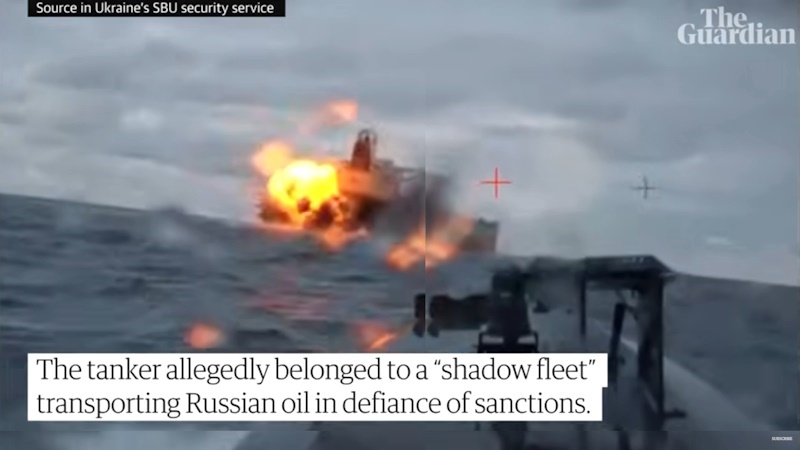
To get around the sanctions, Russia has put together a "shadow fleet" of tankers, mostly run by foreign operators, that haul Russian oil. Ukraine has hit shadow-fleet tankers with drones while they're in port, but was reluctant to attack them on the high seas. Now Ukraine is taking on the shadow fleet, even apparently in Africa.
On 27 November, the Turkish-owned oil tanker MERSIN was damaged by explosions of unknown origin while at anchor near Dakar, Senegal, with the engine room flooded and the stern submerged. Recovery efforts stabilized the ship, with oil offloaded to prevent an oil spill. Ukrainian authorities said nothing about the attack, but were the prime suspects -- all the more so because the next day, 28 November, Ukraine sea drones hit two Gambian-flagged tankers, KAIROS and VIRAT, in the Black Sea off the cost of Turkey.
On 2 December, the Russian tanker MIDVOLGA-2, headed for Georgia, was supposedly hit by an air drone -- though Ukrainian officials denied responsibility, and there was no evidence the tanker was much damaged. There were suspicions that it was a "false flag" attack. However, on 10 December, the Gambian-flagged tanker DASHAN was hit by sea drones while the vessel was under way in the Black Sea en route to Russia. There was no doubt Ukraine was behind this attack, since a video of it taken by sea drones was released.
There have also been attacks using sea drones on the Russian Black Sea oil terminals at Tuapse and Novorossiysk, and even air drone attacks on Russian oil platforms in the Caspian Sea. The Russians are retaliating, intensifying attacks on Ukrainian seaports such as Odesa.
The attacks on the shadow fleet are apparently to drive up insurance costs on the fleet as a whole. Turkey and Azerjaiban have protested the escalation. The escalation may be related to current negotiations for a cease-fire, to demonstrate Russia isn't holding all the cards.
PS: Action in the Caspian Sea is ramping up, with attacks on the freighters RACHMANINOV and ASKAR-SARIJA, which were carrying cargo between Iran and Russia, including munitions. They were hit by air drones, directed by the Chernaya Iskra (Black Spark) resistance movement.
DAYLOG FRI 12 DEC 25 / CREATING WEBTOONS: I've been into the WEBTOONS Android app, which is a Korean-American outlet for webcomic authors. It's pretty mixed, of course, series ranging in quality from "excellent" to "lame", but I find enough to keep my interest.

For example, I follow the series I'M THE VILLAINESS, BUT I WON'T LIVE LIKE ONE. It's a Korean "romantasy" -- romance-fantasy -- in which noble lady Bianca Crawford finds a "magic book" that seems to tell her the future course of her life. The book says she will poison her romantic rival, Maria, and then be slain by her fiance, Duke Ricardo. Bianca tries to defy the script, but though she can modify the story, it always says she will be killed in the end.
OK, nothing more to be said about that here -- the significant thing being that the webtoon imagery is rendered in startling detail, for example glittering palaces, or in the case of Lady Bianca, extraordinarily elegant dresses. Nobody would put such effort into drawing background detail by hand, so I assumed that it was rendered by computer, and wondered what tools were being used. Apparently, there's effectively only one: Clip Studio Paint (CSP).
CSP was introduced by the Japanese company Celsys in 2012; in Japan, it's known as "KuriSuta", short for "Kurippu Sutajio (Clip Studio)". While it does use some AI features, it is at heart a drawing program, with the artist using a digital pen on a tablet. CSP supports both "raster" and "vector" drawing -- raster as in a typical paint program bitmap image, vector in which an image is a set of lines. A wide range of different brush styles is available.
CSP allows import of 3D models, with tens of thousands of models available from "Clip Studio Assets", it appears including shared user models. It supports comic creation with features such as text balloons, and page-oriented or vertical-strip layouts.
CSP is not particularly expensive, but it's effectively a pro tool. I was thinking it would be nice to use to generate copyright-free images for my own use, but it would be overkill for that purpose. However, there is a less sophisticated offering named "Krita" that has a free version that may well suit my needs. I downloaded it, and I'll see if it does anything for me. If it works out, I'll have to give them a donation.
BACK_TO_TOPDAYLOG MON 15 DEC 25 / NATO ENDURES: US President Trump's hostility to America's traditional allies is well-known, with predictions all along that he would take the US out of NATO and ally with the Russians. Retired US Army General Mark Hertling, writing in THE BULWARK ("This Isn't the End of NATO", 11 December 2025), says: Not so fast. First off, Trump legally can't pull the US out of NATO: we're in NATO by treaty, and Congress would have to vote to end the treaty. That won't happen.
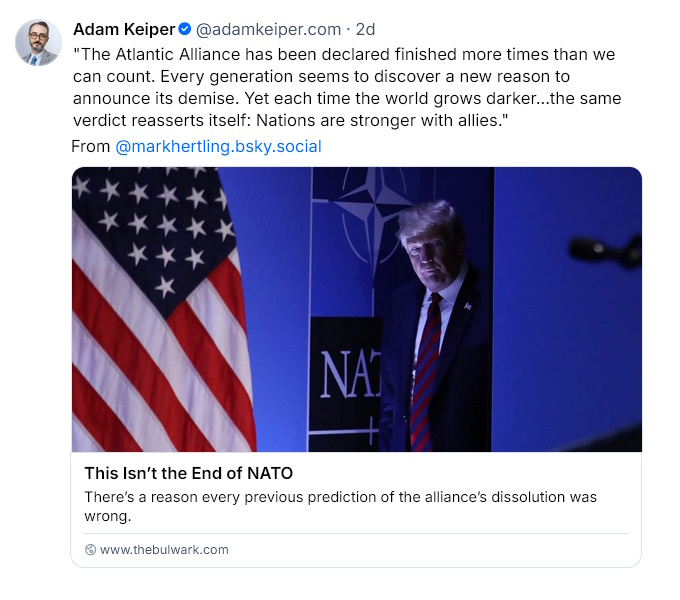
Of course, Trump is undermining the alliance at every opportunity, and there is good cause for unease. However, it's not NATO's first crisis; the alliance has faced seemingly existential threats before, to then go from strength to strength.
In 1966, French President Charles de Gaulle removed France from NATO's integrated military command structure; foreign forces had to leave France, and NATO headquarters had to relocate from Paris to Brussels. It seemed like a fatal blow to the alliance. It wasn't: France continued to coordinate military actions with NATO, and finally rejoined the integrated command structure in 2009.
There were tensions in the alliance in the 1970s, but they were resolved. Of course, with the fall of the Iron Curtain and the end of the Cold War in the 1990s, there were questions as to whether NATO made sense, but the answer was: YES -- with liberated Eastern European states eager to join.
There were then severe tensions in 2003 with the USA's invasion of Iraq. France and Germany publicly opposed the invasion, while members of Congress derided "Old Europe" and took to eating "freedom fries" instead of "French fries". In the end, however, tensions were again resolved.
Trump's contempt for NATO was obvious in his first term, but he could do little more than throw tantrums, in the face of bipartisan Congressional support for NATO. The alliance remained intact, with the US becoming a team player again under Joe Biden.
In his second term, Trump is again throwing tantrums, but with any more result? Given Trump's evident incompetence -- as well as his steep physical and political decline -- he seems a weaker threat now than in his first term.
In 1975, when Hertling arrived in Europe as a second lieutenant, NATO had 15 member nations; now it has 32. NATO persists because of its fundamental value to Western democracy. As Hertling writes:
QUOTE:
NATO is not merely a military alliance. It is an economic stabilizer, a technological commons, a legal and diplomatic force multiplier. It has evolved to connect supply chains, coordinate cyber defense, align industrial standards, secure undersea cables, enforce sanctions regimes, stabilize energy markets, and underwrite financial confidence. ... This is not a world in which alliances become outdated. It is a world in which alliances become structurally indispensable.
END_QUOTE
NATO is too strong, too valuable, to be casually discarded. Trump is a serious but temporary affliction, and NATO will be thriving long after he is gone.
DAYLOG TUE 16 DEC 25 / OBAMA CALLS FOR UNITY: Ex-President Barack Obama and House Minority Leader Hakeem Jeffries headlined a fundraising event in Los Angeles on Sunday, with Obama saying Democrats needed to "meet the moment" and focus on mid-term elections.
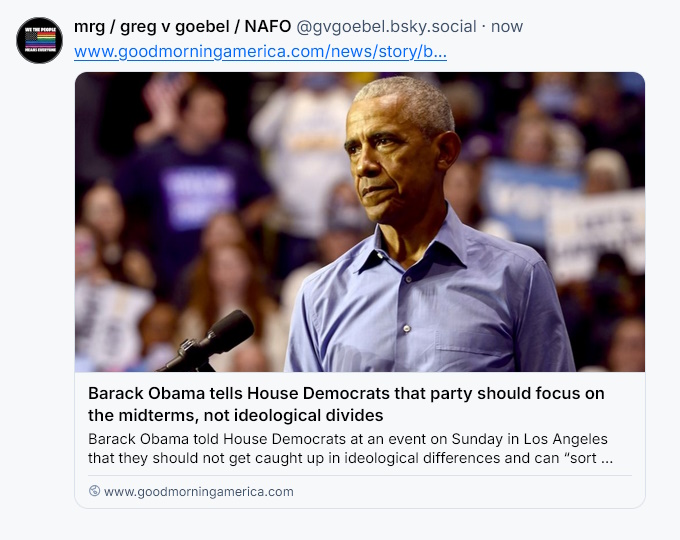
Obama said: "The short-term strategy is, win the House of Representatives -- because that's going to be the circuit breaker that will give us control of one major component of the Federal government." According to Obama, control of the House would give the ability to block "some of the worst impulses" coming out of the Trump White House -- and said that the party had a good message, and needed to make sure it got out:
QUOTE:
Long term, let's tell a story, a better story about who we are as Americans and what we share. We have to tell the story that makes people who feel outside that process, we've got to bring them back in.
END_QUOTE
He stressed that party unity was needed to get the job done:
QUOTE:
The truth is that AOC [Alexandria Ocasio-Cortez] and Chuck Schumer and Bernie Sanders and Blue Dog [center Democrat group], they actually agree in making sure that people have a living wage, they can support a family.
END_QUOTE
Obama said that most Americans aren't interested in internal party squabbles: "If we bring energy and clarity and commitment to talking about things like affordability and making sure people have health care when they need it, and that they have the ability, if they work hard, to be able to support a family", that will resonate with the electorate.
Congressional Democrats, particularly Chuck Schumer, were loudly criticized for "caving in" on the government shutdown in the fall, failing to get Republicans to preserve healthcare funding. In reality, there was no sign that the GOP was willing to do so. Congressional Democrats, having highlighted Republican obstinacy, had no good reason to prolong the hardships caused by the shutdown; they would have ended up being blamed for the pain. In online spaces, however, condemnations of Democratic leadership have persisted.
No doubt some of the criticisms are heartfelt; however, there's no doubt they're also being produced by a loud troll campaign, backed by America's enemies at home and abroad. The "Down With The Dems" messaging is out of control, and has simply become obnoxious.
It will be important to hear what hard Left members of Congress, like AOC and Bernie Sanders have to say about Obama's remarks. It's a reasonable bet to think they will be sympathetic. NYC Mayor-elect Zohran Mamdani won election by understanding that he had to choose his fights carefully; he needed the moderate vote. Taking shots at Andrew Cuomo wasn't a problem.
In his remarks in LA, Obama suggested that ongoing Democrat wins for Mamdani and many others gives cause for confidence, saying: "I think we can all feel a new energy."
DAYLOG WED 17 DEC 25 / SEA DRONES AT WAR: One of the big stars of Ukraine's war against Russia has been "sea drones" -- robot boats carrying explosive charges or various weaponry. In latest news, sea drones damaged a Russian submarine at dock in Novorossiysk.
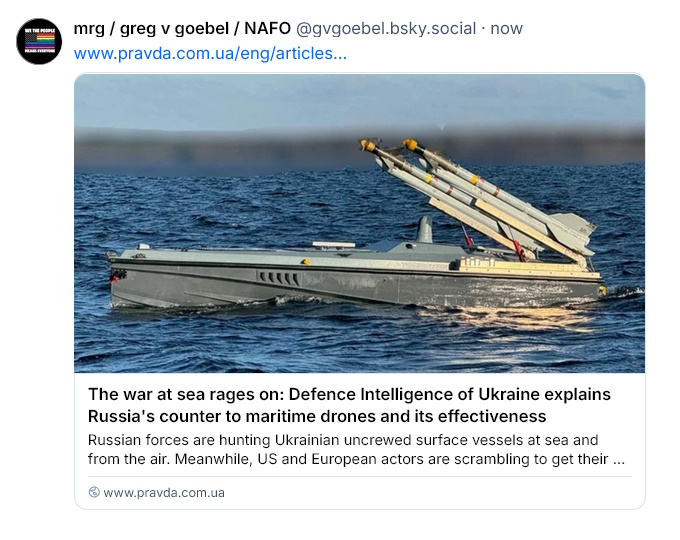
There are two main types of sea drones: the "Sea Baby" series, used by the SBU security service, used to attack stationary targets; and the "Magura" series, used by the HUR military intelligence service (under General Kyrylo Budanov), being smaller, more agile, and more flexible.
An article from UKRAINSKA PRAVDA ("The War At Sea Rages On" by Vladyslav Khrystoforov, 15 December 2025) spoke with an officer in command of "Group 13", the HUR unit concerned with the Magura sea drones. The officer, only referred to as "Thirteen", claimed their Maguras had destroyed two dozen Russian assets at sea or in the air. The Magura V5 has been in use from early on in the war, being very combat-proven and reliable. It is modular in design to make it adaptable to a wide range of missions. According to Thirteen, a Magura V5 sells for about $250,000 USD, but HUR gets it for well less than that. Group 13 experts analyze prospective targets, devising a plan of attack, with sea drones modified if necessary.
After a series of major successes against Russian warships from early 2024, the Russians tried to counter sea drones with armed helicopters. They proved a challenge for a time, until Group 13 came up with Maguras carrying twin heat-seeking missiles, like the US Sidewinder. On the last day of 2024, using such missiles, Maguras shot down two Russian Mi-8 helicopters and damaged a third. The Russians then tried to use jet fighters against the sea drones, but Maguras shot down two Sukhoi Su-30s. Russian aircraft now keep their distance from the sea drones, which are not easy to hit. Group 13 also mounted a stabilized machine-gun turret on the Magura; presumably guidance for anti-air weapons is provided by the electro-optic turret on the sea drones.
The sea drones are small and not easy to pick up on radar; by the time the target senses them, they're dangerously close. Vessels in port may be protected by booms, with the sea drones jumping them. If small vessels are in the way, one sea drone blasts a path for another to charge through.
Thirteen says the Russians have enjoyed some success with sea drones of their own, but the Ukrainians do not provide such a "target-rich environment" as the Russians. Ukrainian success against the Russian Black Sea Fleet has resulted in Russian warships hiding in port. The attack on the Russian submarine in Novorossiysk was carried out by SBU submarine Sea Babies. This was the first widely-publicized case of their use; they come in a range of sizes, though not much is known about them.
DAYLOG THU 18 DEC 25 / SMART GRIDS: Use of renewable energy is growing rapidly these days. As discussed in an article from IEEE SPECTRUM ("Could This Technology Prevent Blackouts?" by Qing-Chang Zhong & Rui Zhong, 15 December 2025) one of the major challenges in the effort is to remake the electrical grid to handle renewable electricity sources like wind and solar.

As an instructive story, on 16 April 2025 Red Electrica, Spain's power grid operator, announced that for the first time, all the country's electricity demand was being met by renewable sources. However, on 28 April, not even two weeks later, the grid collapsed, with 55 million people losing power. In minutes, the grid went from 28 gigawatts (GW) to less than 1.2 GW.
This was not really a freak accident. Electrical grids were designed with big centralized power stations in mind, such as nuclear power plants and dams, not diverse, distributed generation sources like solar parks and wind farms. They make grid stability much trickier.
The authors believe they have a solution, called "virtual synchronous machines (VSM)", which their group developed at the Illinois Institute of Technology, and are working to commercialize at their Syndem company.
When the electrical power grid was introduced, there was a contest between low-voltage direct current (LVDC) and high-voltage alternating current (HVAC). HVAC won out handily, because percentage power loss drops with the square of the voltage. With HVAC, high voltages could be obtained with "step up" transformers, with "step down" transformers used to provide LVAC power to end users.
One big issue is that interconnected HVAC grids have to maintain precise AC phase, or they can interfere with each other. Distributed energy sources typically produce LVDC. To get that power into the grid, it has to be converted to AC, using what's called an electronic system called an "inverter". Traditionally, inverters track the grid voltage, varying current to keep up. If the grid voltage becomes unstable, such "grid-forming inverters" can't keep up, and typically trip off. That can aggravate the instability, contributing to the crash.
The alternative is the "grid-forming inverter", which controls the AC voltage amplitude and frequency. The grid-forming inverter can, in principle, help correct grid instability. However, the HVAC power grid is so designed that all power sources are "synchronous", operating in phase -- but grid-forming inverters are not all that smart about staying in phase.
That's where virtual synchronous machines come into play. VSM devices use sensing and software to ensure synchronization. That doesn't just mean inverters: end-user loads on the AC grid that run on DC use "rectifiers" to convert AC to DC, which can also be designed as VSMs.
VSM operation is now defined in a new IEEE standard, 2988-2024, which provides the rules for "synchronized & democratized (SYNDEM)" grids. Manufacturers are getting on board -- working to create a new electrical grid that has no trouble with renewables.
ED: SYNDEM, of course, implies millions, even billions, of VSMs on the grid. "IEEE", incidentally, stands for "Institute of Electrical & Electronic Engineers". I was a "sparky", an EE, at one time, and it was fun to revisit the electrical world.
DAYLOG WED 17 DEC 25 / MY FIGHT WITH DOCFILES: Every now and then, I get into a fight with software. The fights always get resolved sooner or later; it's useful to write them up, for future reference.

Anyway, when I started writing materials for my website, I figured out a scheme in which I wrote plain text in a text editor, inserting a simple set of formatting codes that I cooked up. I'd run the text files through a set of formatting tools that I also cooked up to convert the files to HTML for the web.
When I started writing ebooks, I needed better formatting, meaning using a proper word processor. I first got the free OpenOffice word processor, then its improved derivative, LibraOffice. I'd write documents in text with format codes as before, convert them to HTML, then import them into LibraOffice for final formatting. LibraOffice defaults to a .ODT file format, which can't be used for Amazon Kindle ebooks, so I'd save a .ODT file as HTML, then package the HTML file along with its illustrations in a zipfile for upload to Amazon Kindle.
That worked fine for years -- but then I got to wondering if it would be easier to find a file format that LibraOffice could generate that didn't need the zipfile to be uploaded to Amazon Kindle. I finally settled on "rich text format", the files having a .RTF extension.
I uploaded .RTF files for some months, and they seemed to work fine. It turned out .RTF is an old format, so I got to wondering if a more modern format would be better. I figured out that Microsoft Word's format, ".DOCX", was more or less a standard. However, while tinkering with .DOCX files, I found out that the .RTF files generated by LibraOffice had a big problem: if I tweaked a table of contents, the table would break. Investigation showed that LibraOffice had a reputation for being buggy with any files except .ODT.
That left me with two related problems: replacing LibraOffice with something more reliable, and fixing the broken .RTF files. I had archived copies of those documents, but the .RTF files included updates that I didn't want to lose. I was faced with the big job of reconstructing them.
I looked around for tools to fix the .RTF files, to end up searching for a better (free) word processor. Microsoft has a free online version of MS Word, but I found it clunky. I then installed WPS Office, a Chinese product with a free version -- but it was almost malware, installing ad pop-ups and unwanted software on my PC. Finally, I tried Google Documents, which is a free online system associated with Google Drive -- to find it appeared, at first sight, not much better than the online version of MS Word.
I figured I was stuck with LibraOffice and reconstructing the .RTF files -- but then I got to tinkering with Google Docs again, to find out that I could convert .RTF files to the Google Docs file format -- ".GDOC" -- and then fix the table of contents. I could save the documents as .DOCX, and upload them fine to Amazon Kindle. It was something of a miracle that I stumbled onto that, since it was a complicated sequence: .ODT -> .RTF -> .GDOC -> .DOCX. Variations from that sequence didn't do the job. I also found out, on closer inspection, that Google Docs was far superior to LibraOffice, not buggy and much easier to use. Problem solved.
Incidentally, Google Docs is designed for collaboration: multiple people can edit the same .GDOC file at the same time, with changes appearing for all of them at the same time. Google Docs sits on the Google Drive file system; I linked Google Drive into my Windows file system, but because .GDOC files are shared, they can't be copied to Windows -- I got errors if I tried. I had OneDrive, no need for Google Drive, so I unhooked it from Windows, and upload and download files instead. I can click and drag files between Windows and Google Drive, but that doesn't necessarily work right either.
BACK_TO_TOPDAYLOG MON 22 DEC 25 / MONEY FOR UKRAINE: The Trump Regime has generally cut off funds for Ukraine, leaving Ukraine's serious allies scrambling to come up with funds for continuing the war. One obvious source of funds is the Russian money frozen in Western banks.
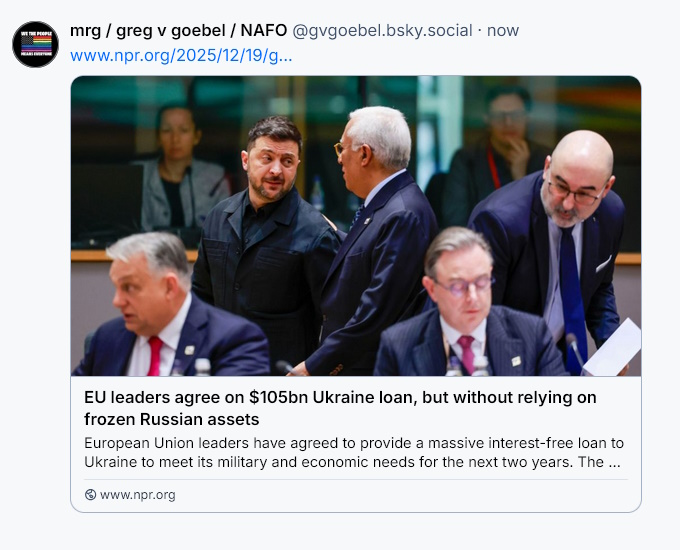
Most of the Russian funds are held by Euroclear, a Belgian financial clearing house. EU leadership pushed to use the Russian money for a huge loan to Ukraine, but Belgian officials objected. On 12 December, the EU did agree to put an indefinite freeze on 210 billion euros ($246 billion USD) of Russian money held in EU financial institutions; previously, the freeze had to be renewed by vote every six months. That was intended to neutralize Hungary and Slovakia, which seemed inclined to vote NO on renewal.
That didn't resolve the funding issue, with intense debate on Ukraine continuing for another week. Polish Prime Minister Donald Tusk warned on 18 December that it would be a case of sending "either money today or blood tomorrow" to help Ukraine.
On 19 December, EU Council President Antonio Costa announced that a decision had been made for the EU to provide 90 billion euros ($106 billion USD) as a zero-interest loan. Ukraine will only repay the loan when Russia provides reparations. Hungary, Slovakia and the Czech Republic opposed the loan, but a deal was reached in which they did not block the package and were given protections against any financial fallout. German Chancellor Friedrich Merz praised the agreement, saying:
QUOTE:
These funds are sufficient to cover the military and budgetary needs of Ukraine for the two years to come. ... If Russia does not pay reparations, we will, in full accordance with international law, make use of Russian immobilized assets for paying back the loan.
END_QUOTE
Kremlin officials claimed to be happy with the loan, calling it a "major blow to EU warmongers" -- because Russian assets were not seized. Since the loan kept Ukraine in the fight, while Russia continues to run out of steam, the Russian claim was unconvincing. I commented:
QUOTE:
This is a huge blow to Putin. He pretends he has a strong hand to play, but Russia is bleeding out in Ukraine. He bluffs his way and gets angry with his stooges when they tell him bad news -- so he lives in a bubble.
END_QUOTE
A Finnish user posted a picture of an old, sickly bear, with the caption: "DO NOT POKE RUSSIAN BEAR! Because it might die." Things are not looking good for Putin -- but who knows how long it will take for him to fall down?
DAYLOG TUE 23 DEC 25 / BITCOIN CRASH: As discussed in an essay by economist Dean Baker of the Center for Economic Research ("Public Makes Trillions on Plunging Crypto", 18 December 2025), since October Bitcoin and other cryptocurrencies have suffered a market crash:
QUOTE:
Bitcoin hit a peak value of $124,800 on October 4th. Its price has since fallen sharply, standing at $85,900 at the close of trading on December 17th. The other major crypto currencies had similar tumbles.
... In total, between early October and this writing on December 17, the major crypto currencies lost a total of more than $1.2 trillion in market capitalization. This would be enough to send every household in the United States a check for $10,000.
END_QUOTE
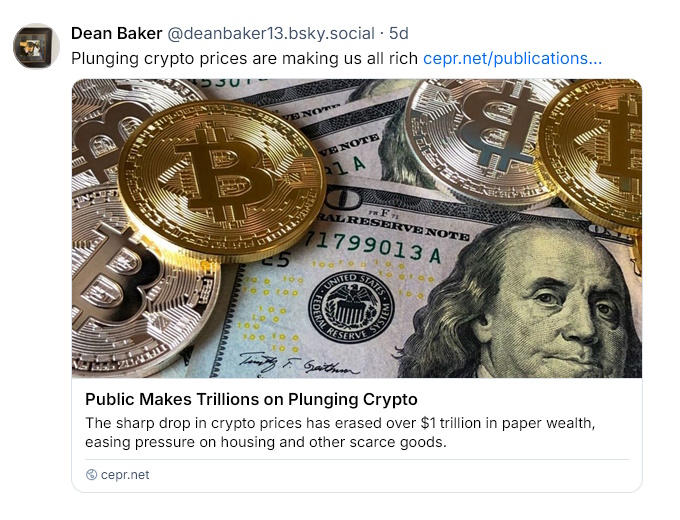
Baker says this is good news for everyone except the cryptocoin bros. Cryptocurrencies, Baker says, are like counterfeit money that is indistinguishable from the real thing. Get enough of it in circulation, it starts encouraging inflation.
What happens if cryptocoins lose value? "Crypto has no inherent value, but people with large fortunes in crypto can demand large chunks of what the economy produces. If the value of crypto plunges, they are less able to pay high prices for houses and Superbowl tickets." That, of course, makes things easier for the rest of us.
* Not incidentally, as Baker certainly knows, no money has "inherent value" -- or at least it hasn't since we stopped making money from precious metals, and even that didn't exactly give it an "inherent value". Money is no more or less than a "token of exchange"; it's worth what people think it is worth. Confronted with deflation, the Federal Reserve can create more money "out of thin air", and put it into circulation. Money based on precious metals was nothing more than expensive tokens. The value of real currency is granted by the credibility of the government in its issue, with the government controlling its issue to guard against inflation.
So, what's the difference between cryptocoin and real money? The difference is that private individuals are making it up, like passing off Monopoly money as the real thing. Nobody has any reason to have confidence in its value. It's only used in transactions by criminals, buying drugs and the like. However, unlike Monopoly money, it can be traded for real money. The end result is an increase in the money supply, which implies inflation.
There are other problems with cryptocoin, one big one being that it's a "bubble asset", not connected with anything of more durable value, with sellers after some "greater fool" who will buy it for a greater price. In addition, money going into cryptocoin does little to build up industry or put people to work in gainful employment. It ends up being a scheme to allow the wealthy to increase their concentration of wealth -- which, as it turns out, means the impoverishment of the rest of us.
Does the decline of the value of cryptocoins suggest that the bubble is deflating? Can we see a future where people lose all faith in cryptocoin, and decide that digital Monopoly money can't be converted to real money? That's hard to say. Traditionally bubble assets rise and fall quickly -- but the crypto bros have been able to prop cryptocoin up for years. It's been "the grift that keeps on grifting".
GOOGLE COINS: It should be noted that most money is digital money these days. Only maybe 10% of US dollars are in physical currency. In addition, people can and do make up digital currencies that aren't problematic.
I like to read the WEBTOONS webcomic service on my smartphone. The webcomic series are often free; when episodes are locked, they can be unlocked (sometimes) by watching an ad, or (always) by paying a few "coins", which are a "virtual currency".
There are "Google coins" for Android and "Apple coins" for iOS. Such virtual coins are most closely identified with game apps, but all apps have to take payments in virtual coins. I purchase coins from Google using a credit card. Having to use Google coins seems a little strange at first, but it turns out to make sense: app developers can use Google coins to take payments from all over the world, Google handling the logistics.
DAYLOG WED 24 DEC 25 / COVID REVISIONISM: Princeton University Press has now published a book titled IN COVID'S WAKE (ICW), by Stephen Macedo and Frances Lee, the book being a criticism of how the COVID-19 pandemic was handled. ICW is getting a lot of attention from the science community, little of it favorable.
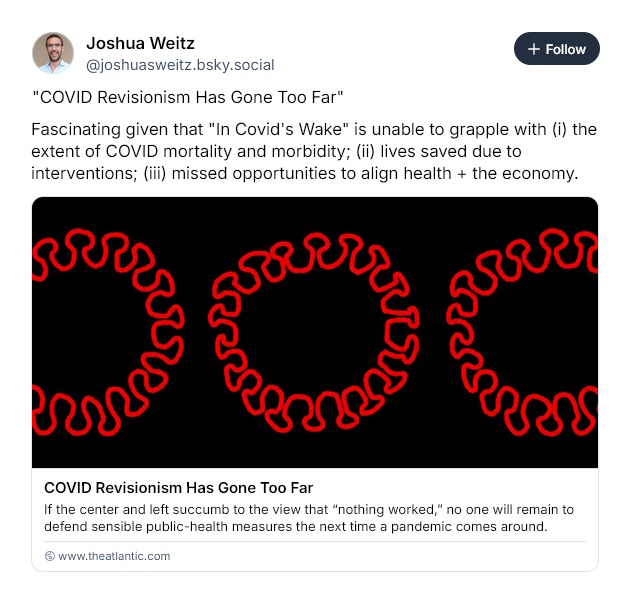
Joshua Weitz and Greg Gibson -- professors of biomedicine at the University of Maryland and Georgia Tech, respectively -- had a conversation on SUBSTACK / SCIENCE MATTERS about the book. Gibson summarizes the book's argument as saying:
QUOTE:
The pandemic was not that bad, that all of the economic disruption and home schooling and social distancing was too high a price to pay for saving a million lives. They argue that it was known that non-pharmaceutical interventions (NPIs) don't work, and imply that if only we had let the virus spread through young people quickly there would have been less reliance on vaccines that did not halt the virus in its tracks anyway.
END_QUOTE
One Michael Hobbes, writing elsewhere, said of ICW: "This is genuinely horrifying. Fact-free far-Right agitprop given accolades by credible media across the political spectrum."
Macedo & Lee, it seems, are political science types with no science background -- and it shows. They underestimate the severity of COVID. According to Gibson, even early on it was recognized that the lethality of COVID-19 was about 1%, 10% in the elderly -- and the "transmission ratio", the number of new infections from one infected person, was at least 3. In practice, COVID-19 killed 1.2 million Americans; vaccines were estimated to have saved a million lives. The threat was not over-estimated -- if anything, it was under-estimated.
Next question, of course, is whether NPIs were effective. The most significant NPI was the N95 mask -- the criticism against it being that the SARS-COV-2 viruses were so small that they would easily get through the masks. In reality, the viruses were carried on droplets from sneezes and such, and the masks were highly effective.
To be sure, there was fumbling with the NPIs, but that was inevitable, given people scrambling to deal with a crisis. The NPIs limited infections until vaccines were available. The alternative of letting the virus spread would have been acceptable only to people who didn't care how many died.
Last but definitely not least, criticisms of the mRNA COVID-19 vaccine are misplaced: it was safe, highly effective, and got us out of the pandemic.
The question in the end is why Macedo and Lee are so determined to spread dangerous misinformation. It seems to be an exercise in spite against "liberalism". They make no criticism of Trump, who denounced NPIs as infringements on American freedoms, promoted ivermectin and other quack cures, and cast doubts on vaccines while Americans suffered and died. Trump is on the way out; we can only hope his malign influence fades out after him.
DAYLOG THU 25 DEC 25 / SCOTUS RESTRAINS TRUMP: The six conservatives on the US Supreme Court have shown little inclination to restrain President Trump's high-handed actions -- but have finally drawn a line, telling him he can't send the military to US cities any time he wants.
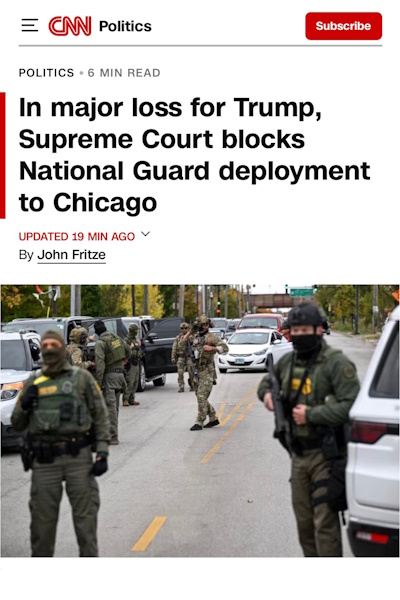
Law blogger Jay Kuo, writing on SUBSTACK / THE STATUS KUO, analyzed the SCOTUS decision. It was almost a surprise, since the "SCOTUS 6" believe in the "unitary executive" -- which asserts that a president should have few or no restraints in running the executive branch.
It appears the concept was cooked up during the Reagan Administration; its constitutional support is arguable, and it certainly doesn't seem like a good idea to empower a president who is blatantly corrupt, demented, and out of control. Anyway, in the current case, as Kuo writes:
QUOTE:
In a 6-3 ruling, with the usual radicals dissenting (Justices Alito, Thomas and Gorsuch), the Supreme Court found that President Trump's deployment of Federal troops to [Chicago] Illinois was illegal.
END_QUOTE
Trump can't use the military to advance his fascist project. The court did not decide against Trump by rejecting his claim that he had to send the military to suppress "rebellion" -- instead following an "amicus [friend of the court]" brief submitted to the court by Professor Marty Lederman of Georgetown University.
A president's authority to call up the National Guard is defined under "Title 10" of the government framework "US Codes of Law". Title 10 states that a president can send in the National Guard if he "is unable with the regular forces to execute the laws of the United States."
"Regular forces", Lederman says, means the regular US military. The legal implication is that the National Guard can be sent in only if the regular military can't impose order. That greatly complicates life for Trump, since he would have to send regular forces first and then find they couldn't do the job. Add to that the "Posse Comitatus Act", which says the military can't execute the laws, except when specifically authorized by the Constitution or an Act of Congress.
SCOTUS agreed with Lederman. Kuo adds that there remains the authority granted to a president to send regular military to the cities under the "Insurrection Act" -- which the exciteable claim means Trump can declare martial law and send in the troops to suppress an election.
Not true. Federal courts will not authorize deployment of troops except in places where "rebellion" is out of (local) control, and that's not happening. Trump can't send the military all over the USA, and in particular would have no pretext to send them to peaceful Blue districts to suppress the vote. Kuo concludes that the days of Trump "threatening to call in the federalized National Guard to assist ICE & CBP ... now appear to be drawing to a close."
I might add that it's hard to think the National Guard would be enthusiastic about helping Trump steal an election in the first place. Reports of National Guard personnel involved in Trump's internal deployments so far suggest they find them annoying, even humiliating.
DAYLOG FRI 26 DEC 25 / REFURBISHING PHOTOS WITH AI: Last week I wrote about getting into trouble using the LibraOffice word processor to create my ebooks, to find out -- to my surprise -- that Google Documents did the job much better, proving to be a big step-up Google Docs is. This week, I went through a follow-on exercise, using AI to cook up illustrations for my ebooks.

As mentioned some time back, I got to tinkering with Google Gemini / Nano Banana (GNB), and cooked up an image of an image of a bitcoin ATM. I did it for fun, but I recognized the potential: I got a good image that was completely copyright-free.
Anyway, years ago, I wrote a long history of the US Civil War, and over the past few years have been breaking it down into separate volumes. Illustrations are troublesome, since Civil War photos and drawings often need a lot of reconditioning, and it may be hard to find good images of some subjects.
I had an antique image of Union General Ambrose Burnside, noted for his impressive "sideburns", but the image was much too small and seedy to be useful. I got to wondering if GNB could reconstruct a good photo out of it. I tried it -- and got a clean, detailed image with a resolution of 1024x767 pixels. It was in color, which didn't look authentic, but it was trivial to convert it grayscale.
I did a few other Civil War figures -- to find out that I had to be careful on how I prompted GNB to reconstruct the image. When I specified that the image was of Confederate General AP Hill, it came back with weird embellishments on his uniform. After more tinkerings, I figured out that I had to tell GNB something along the lines of: "Reconstruct this old photograph as a modern good-quality photograph, while remaining true to the subject."
GNB is also a bit finicky: I'm writing about Kamala Harris and wanted to update some old Harris family pictures, but GNB won't touch images of public figures. I tried Microsoft Copilot instead, and it didn't have a problem -- at least for now. Google is notably cautious in its use of AI.
Further tinkering with GNB showed I could use it to, say, remove clouds from the sky in photos I'd taken myself, and generate copyright-free icon images for documents. To sum up, without intending to, over the past few weeks I've ended up finding new ways of doing things that should save me a lot of effort in my writings. The only problem is that it's taken me a lot of effort to get the new things to work right.
[UPDATE: As it turned out, GNB turned out to be an excellent tool to refurbish Civil War images, once I figured out how to use it. One photo of Union general was flawed, because the general was wearing gloves, and GNB didn't render them well. I told GNB to get rid of the gloves, leaving the general bare-handed, and that worked out nicely.]
BACK_TO_TOP
